
The Scary Truth, and the patterns that haunt us
My addiction to emotionally unavailable men began when I was two years old. The attention came sporadically on weekends after my parents divorced, and even then only when my dad decided to turn up. It was unpredictable, but thrilling when he did.
Over the years, his visits became even rarer, and sometimes humiliating, like when my dad would laugh along with my brother at some prank he pulled on me. We had phone calls once in a while, but between the ages of 7 and 17, I saw him only every five years.
This unmet need turned my heart into a bottomless pit for male attention. I sought it anywhere, confusing negative attention for positive. I accepted it all because I didn't know I deserved better. It was just… familiar.
I paint this picture as context for what I've learned about attachment and the kind of love we seek as adults. In Getting the Love You Want, Harville Hendrix writes about how we repeat patterns we learned in childhood. He explains that in romantic relationships, we subconsciously seek the kind of love we got from our parents. Hendrix focuses on the parent of the gender you're attracted to, but I think it's wider than that. Whoever you love, look at how you were loved by the people who raised you.
So if my dad was not emotionally available to me, then according to attachment theory, I learned subconsciously that this kind of love is what I want. I learned to accept, even seek out, emotionally unavailable partners. This didn't make sense to me until recently, when I ended a long-term relationship and cited emotional unavailability as the root cause. When we first met, I chased him for two years, just waiting to be noticed. Ten years in, I started to need more emotional connection and my actual needs transitioned from subconscious to conscious. By year 22, I was still reaching for a connection he didn't know how to give, and neither of us knew how to cross the chasm between us.
Then I started to see the pattern repeating in another relationship. I chased my last boyfriend for three years, and he kept me at arm's length for two of them. When he finally started to become emotionally available, it felt intoxicating, and the toxicity of our dynamic was damn near erotic. We were on again, off again for so long, and then it hit me: I was chasing the same high over and over. It wasn't him doing it to me. It was me doing it to myself. This was my addiction.
Thinking back, this pattern has turned up again and again in various crushes. Understanding my attachment style (insecure-anxious, with a dash of disorganized for added spice) and my subconscious biases is important for breaking the cycle. But understanding my beliefs about love is what gets to the root on an embodied level. When I look deeper, the belief is this: I deserve whatever I can get, even if it doesn't feel good. That is the belief I need to upend. But how do we shift beliefs?
For the last three years, I have woken up every day and said a mantra while doing breathwork and a moving meditation. Part of it goes: I am whole. I am worthy of love. I am loved. I am important… By repeating this, I'm engaging my Reticular Activating System (RAS), the tiny Google search window in my brain that seeks to confirm my beliefs and biases (an oversimplification, yes). I'm trying to override my deeply held beliefs about myself by giving my RAS new search terms (I am worthy of love), so that instead of confirming the negative bias, it seeks evidence for what I am shifting towards. It's even easier when I pair the practice with a microdose practice of psilocybin, which is known to promote neuroplasticity, the ability to form new neural pathways. That comes in handy when the existing pathway about love is, “ deserve whatever I can get even if it's shitty.” That path may be well worn, but I am building a new superhighway straight to, “I deserve consistent love and emotional availability.”
But you can't just take shrooms and expect everything to change. . . you have to do the actual work, too.
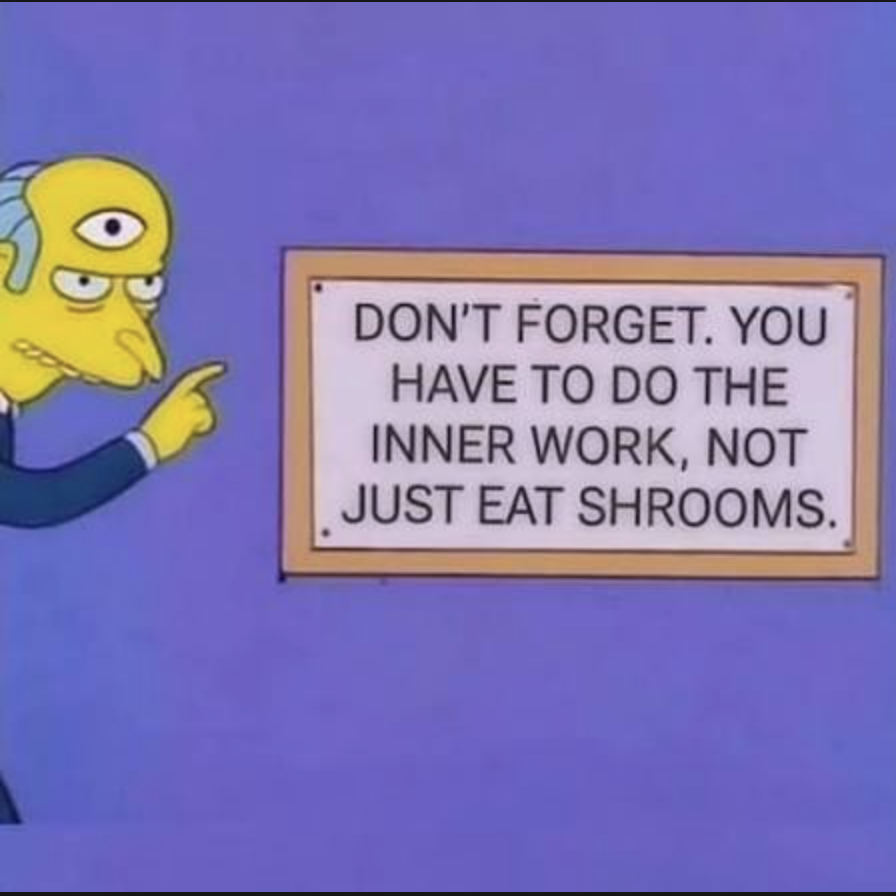
The actual work:
setting boundaries
knowing that you have needs and capacity
understanding your patterns and impulses
communicating all of it to yourself and the people you love.
It's also being able to walk away from something that doesn't feel good 90% of the time, even though it might feel like pure ecstasy the other 10%. It's about unlearning old habits and creating new ones. And it's about learning new skills to sense your nervous system well enough to notice, because if it's been in overdrive your whole life, chances are you're pretty numb to the discomfort. Understanding a pattern is one thing. Feeling the difference in your body is another, and that's where the real shift happens. It's what I help people do in my coaching practice: learning to notice your nervous system, name your needs, and let yourself receive love that feels good more than 10% of the time.
You deserve a love that doesn't leave you refreshing your phone. You deserve to feel desire in a body that feels safe. If you're ready to build your own superhighway to consistent, delicious connection, come work with me. Book a free discovery call:
